 World Stick Museum
Sheltering
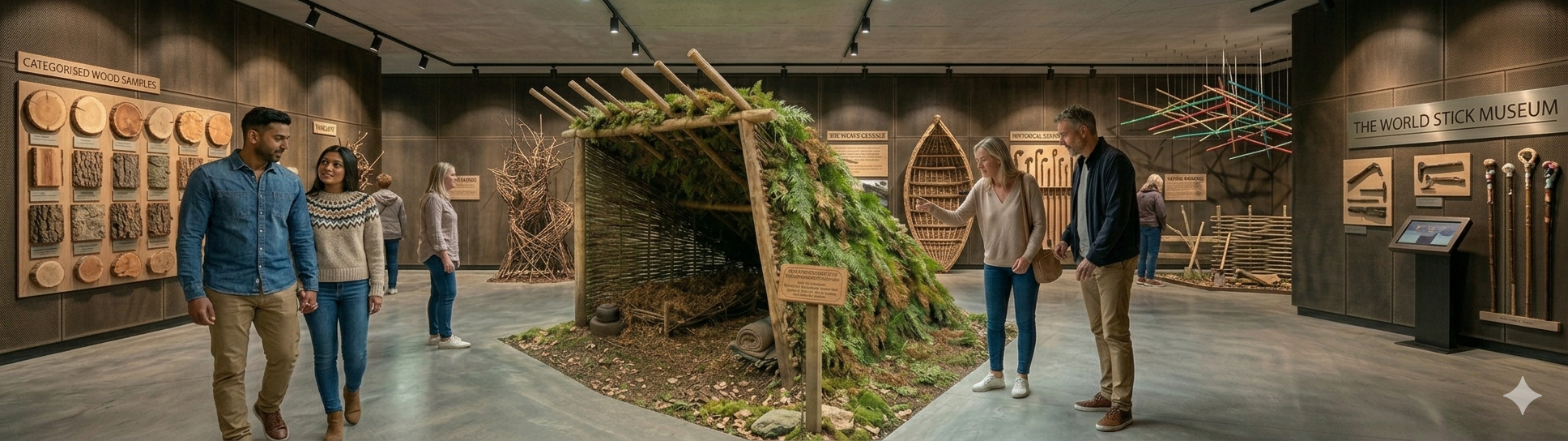
Long before bricks, concrete or steel, humans relied on sticks to build the structures that kept them safe. At the heart of The World Stick Museum's "Sheltering" gallery stands a reconstruction of a traditional lean-to. This exhibit serves as a testament to the ingenious simplicity of early human engineering. Visitors can observe how flexible saplings are interwoven to create a "wattle" skeleton—a structural lattice that is both lightweight and incredibly resilient.
Early human shelters
Interactive panels take you through the evolution from the lean-to to the Bronze Age stilt house, exemplified by the extraordinary finds at Must Farm. While the lean-to relied on the forest floor, stilt houses utilised "wattle" techniques to create raised platforms above marshes and rivers.

This architectural shift provided natural defense and access to aquatic resources. Builders drove massive oak piles into the riverbed, supporting circular homes with conical thatched roofs. The "sticks" were no longer just a windbreak; they became a sophisticated structural grid of floor joists and woven walls, lined with clay. This move from the ground to the water showcases a mastery of carpentry that turned precarious wetlands into a thriving, "British Pompeii" of domestic life.
Wattle and daub
One of the most widespread building techniques in history, wattle and daub uses woven sticks (the wattle) coated with a mixture of mud, straw and clay (the daub). This method has been used for thousands of years and can still be found in traditional buildings today.
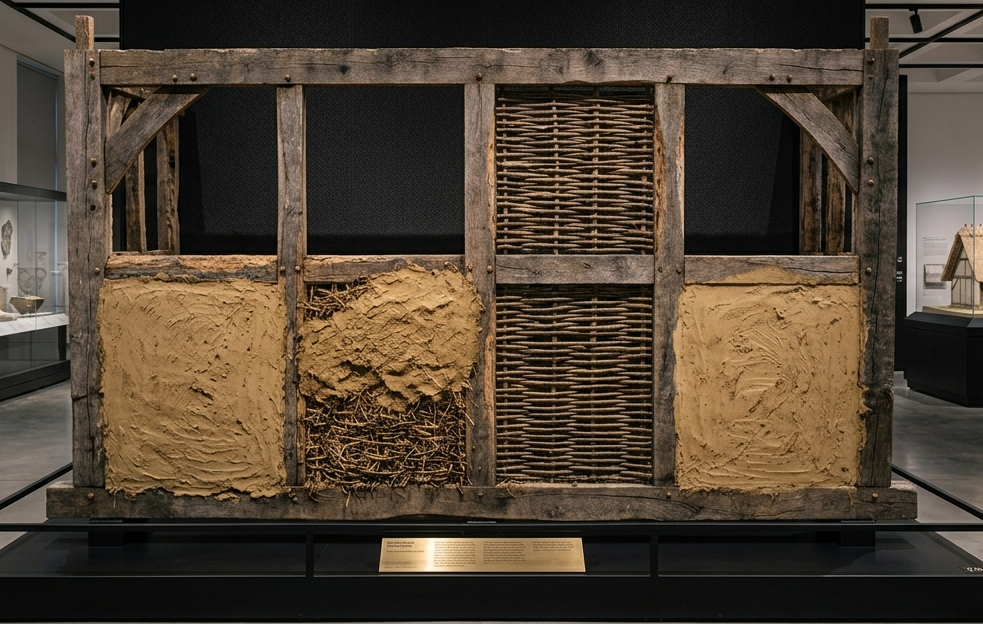
Our Wattle and Daub exhibit features a life-sized timber frame with exposed hazel "wattle" weaves, partially coated in "daub"—a traditional mix of clay, straw, and dung. This ancient composite provided Neolithic homes with incredible weatherproofing and thermal insulation. Why not join one of our workshops where you can build your own wattle and daub wall?
An excellent example of wattle and daub construction can be seen at the nearby Avoncroft Museum which also has wooden building in various stages of construction so you can see the technique used first hand.

Build your own shelter
The World Stick Museum has many interactive exhibits that visitors can get hands on with. Building a shelter out of sticks, branches and natural materials is always fun and museum staff are on hand to guide you through traditional construction techniques.